Narration
Explanations, training, and documentation
CraftWrite AI Solutions™ · Professional Edition 2026
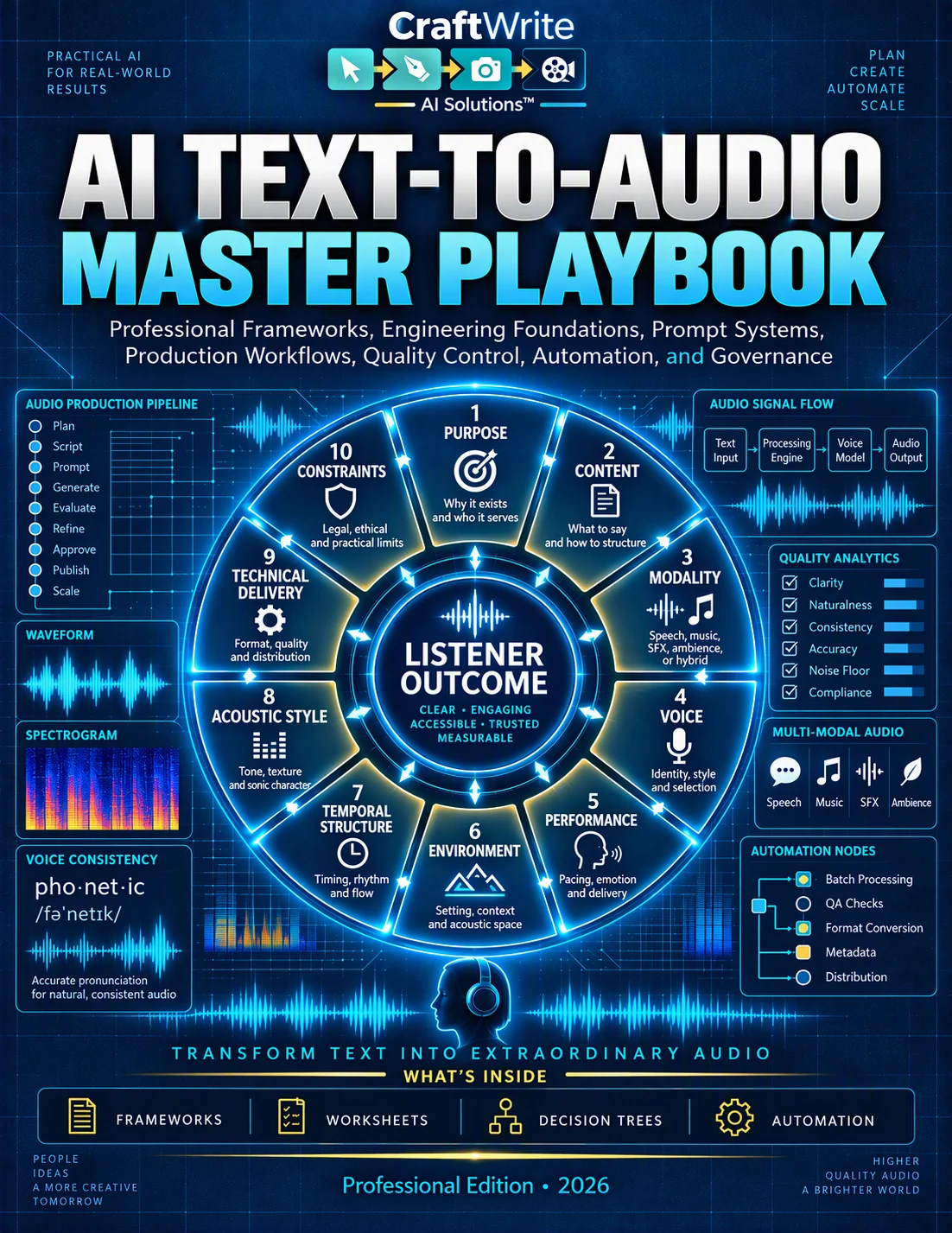
A structured, measurable, responsible production system for shaping a designed listener experience—from the first brief and script through review, delivery, and a reusable asset.
The core promise
Text-to-audio is broader than speech: it can combine dialogue, music, effects, ambience, and layered scenes. Start with what the listener should understand and feel. Then choose a modality, produce a representative test, review it against clear criteria, and keep an approved, reproducible version.
Text
Intent
AI
Production
Audio
Experience
Listener
Outcome
Professional workflow
Use the stages as a production sequence. For a live project, complete only the worksheets that fit the work.
Define the listener, objective, modality, context, and success conditions.
Prepare approved script, voice direction, prompt, and technical plan.
Create a short, representative test before committing to a full production.
Review content accuracy, performance, pronunciation, rights, and evidence.
Change one variable at a time, retest, and record what changed.
Turn approved decisions into reusable processes and asset libraries.
Deliver, measure, maintain, and archive the approved configuration.
Common modalities
One project may use a single format or combine layers. Let the listener, context, and use determine the mix.
Explanations, training, and documentation
Characters, interviews, and conversation
Underscore, themes, and stingers
Actions, transitions, and interface sounds
Environments, scenes, and atmosphere
Layered combinations for richer scenes
Contents at a glance
The reference guide moves from systems thinking and technical foundations to voice direction, modality-specific playbooks, post-production, governance, and reusable resources. Use it as a production sequence: read chapters in order, complete only the worksheets relevant to a live project, then generate the smallest useful test, score it, change one variable, retest, approve, and archive the winning configuration.
Responsible AI & quality
An output may sound polished and still be inaccurate, unauthorized, misleading, inaccessible, or unsuitable for its context. Human approval belongs in the production plan.
Prompting tips
Production evidence chain
Start with a clear listener, objective, modality, context, and success condition. Review content, performance, sonic quality, technical fit, and governance separately; test with a representative passage and change one variable at a time. Keep a traceable record of approved scripts and pronunciation decisions, model and voice settings, prompts and source material, test and review results, consent and compliance evidence, delivery specifications, and final archive location.
Applied pilot:
A CraftWrite AI Solutions™ playbook
See the playbook’s actual file format, price, included materials, and purchase status on its product page.